
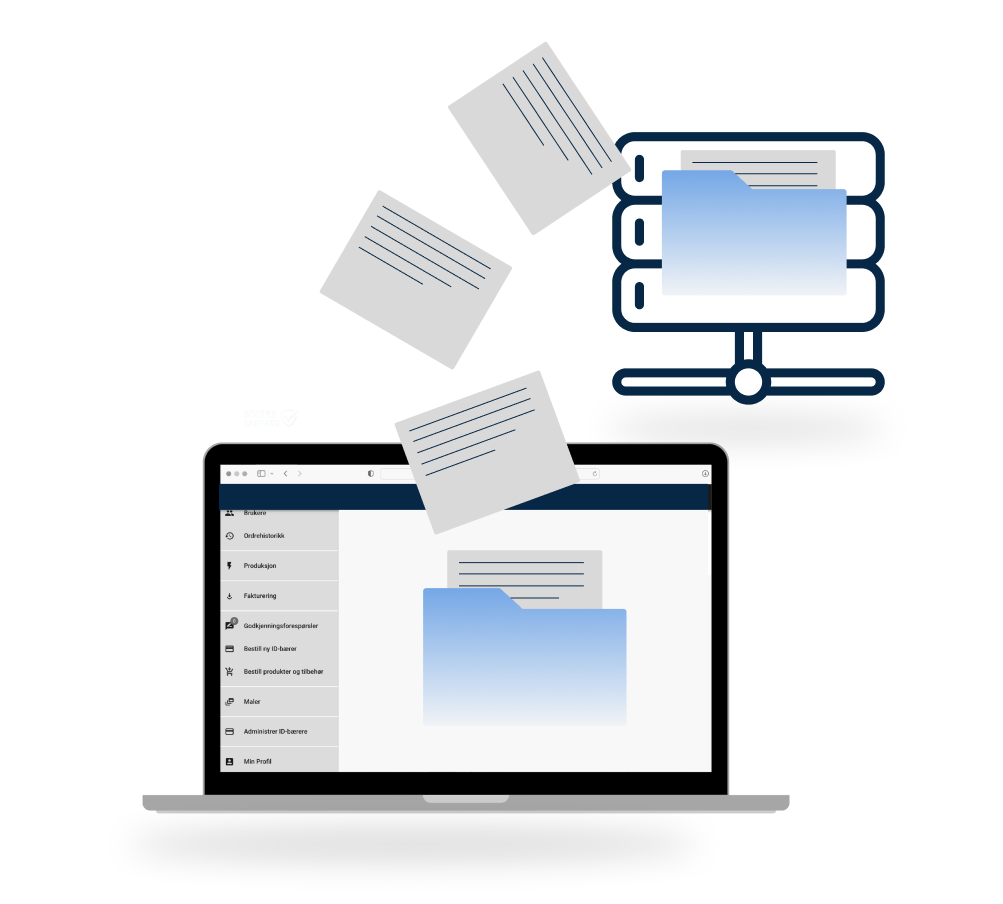
AMR ensures that credential data from Breeze flows automatically into the systems that depend on it. When a card is produced, activated, or deactivated, the update is delivered to a file or a MSSQL database that can be used for integration to access control, HR platforms or other internal applications with no need for manual steps. This reduces onboarding time, eliminates errors, and keeps your identity landscape consistent.
Access Management Router (AMR)
How it works
Breeze triggers events at key points in the credential lifecycle. AMR receives these events, formats the data according to your mapping, and delivers it to the target system—either as a file, a database update, or (soon) an API call. If something fails, designated recipients are notified so issues can be addressed quickly and safely.
Available delivery methods
AMR supports both continuous updates and one-time deliveries:
– File Synchronization / File Transfer for file-based systems.
– SQL Synchronization / SQL Transfer for database integrations.
– Webhooks coming soon for real-time API delivery.
What AMR is used for
AMR supports the core integration needs of modern access environments, including:
– Automatic onboarding into physical access control systems.
– Synchronizing status changes throughout the card lifecycle.
– Mirroring identity attributes between Breeze and HR/ERP systems.
– Handling temporary or short-lived Credentials.
When to use AMR
Choose AMR when you need a reliable, automated, and auditable flow of credential data into existing systems—without building or maintaining your own integration layer or relying on manual credential administration in the access control system.
Need technical details?
Full specifications, field mappings, and method documentation are available at doc.idportal.no
